


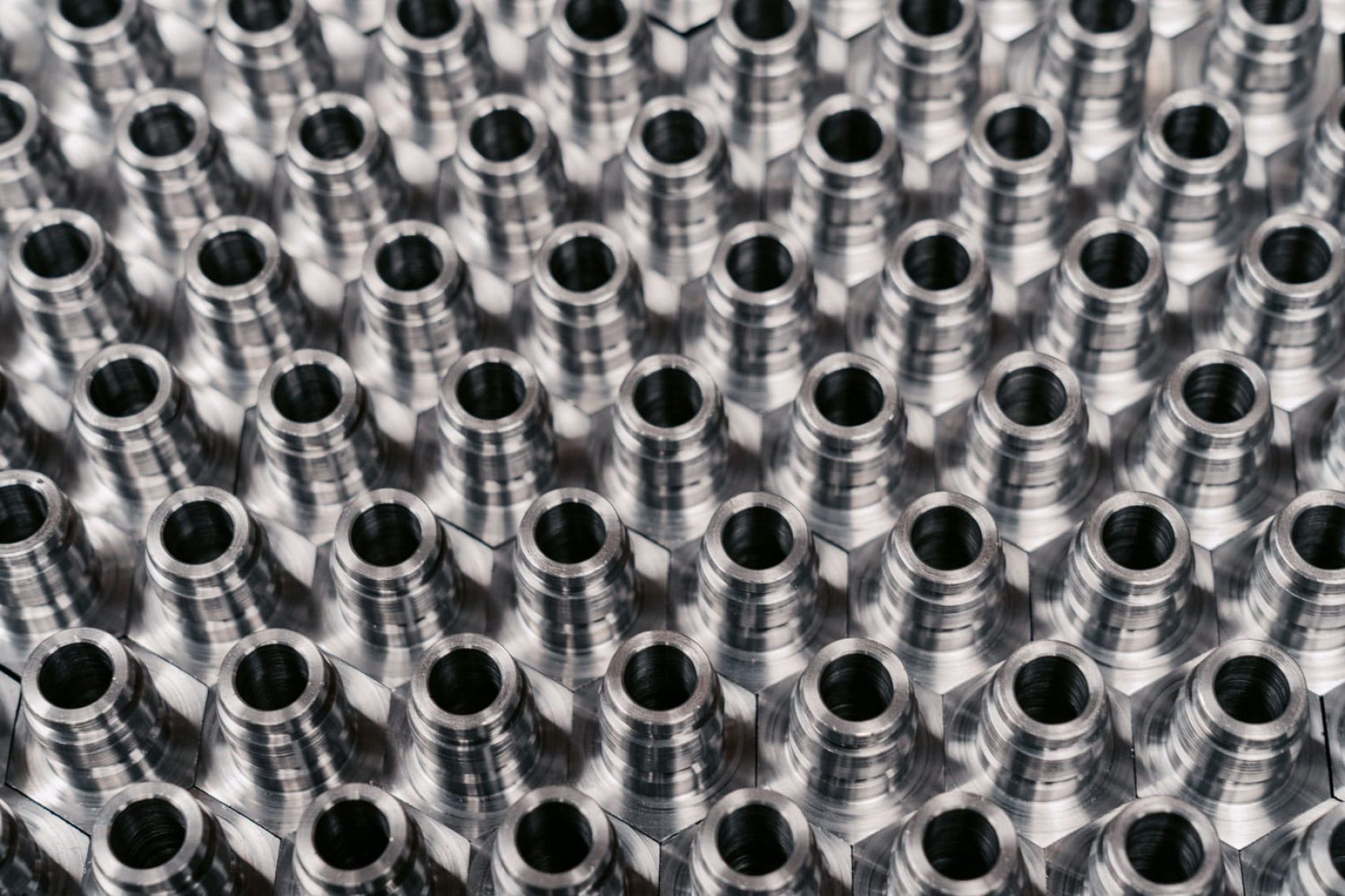
In precision machining, turning hard metals and high-strength special alloys represents one of the most complex and at the same time most strategic challenges. These materials are increasingly required in sectors such as aerospace, automotive, medical and advanced manufacturing, thanks to their excellent mechanical properties in terms of wear resistance, dimensional stability and long-term durability. However, these very characteristics make them particularly difficult to machine using conventional turning processes.
Challenges in hard metal and special alloy turning
Turning hard metals and special alloys, such as nickel-based superalloys, titanium or hardened steels, requires a specific approach based on advanced technologies, specialized expertise and strict control of every phase of the process. These materials are characterized by high hardness, intrinsic brittleness and low thermal conductivity.
During machining, heat tends to concentrate in the cutting zone, placing the tool under significant stress and increasing the risk of premature wear, cutting edge microfractures and loss of surface quality. In addition, the high cutting forces generated can cause vibrations, process instability and difficulties in maintaining tight tolerances, especially when high-precision surface finishes are required during hard metal turning.
Process control and management of cutting variables
One of the key elements in hard metal and special alloy turning is the use of diamond and CBN superabrasive tools.
Polycrystalline diamond is particularly suitable for machining abrasive materials and non-ferrous alloys because it ensures significantly longer tool life and enables extremely high-quality surface finishes. CBN, on the other hand, is the ideal choice for turning hardened steels and high-hardness ferrous materials thanks to its resistance to high temperatures and its ability to maintain cutting-edge stability even under extreme cutting conditions.
Alongside tool selection, the cutting parameters optimization plays a fundamental role. Cutting speed, feed rates and depth of cut cannot be set using standard values but must be defined according to the material, the workpiece geometry and the machining conditions.
Another key factor in hard metal and special alloy turning is machine and setup stability. Machining high-strength materials requires machine tools equipped with high-precision spindles and high structural rigidity in order to minimize unwanted vibrations and deflections. A carefully designed setup allows consistent process quality and enables machined surfaces to reach high standards of precision and repeatability.
Sarbo’s approach to hard metal and special alloy turning
Sarbo is able to successfully handle hard metal and special alloy turning, providing customers with a tailor-made technical solution. The goal is to guarantee performance, reliability and consistent quality even in the most critical applications.
The use of diamond and CBN superabrasive tools, selected according to the material to be machined and the technical specifications of the component, ensures high wear resistance, cutting edge stability and high-level surface finishes.
The effectiveness of superabrasive tools is further enhanced through careful optimization of cutting parameters. At Sarbo, spindle speed, feed rates and depth of cut are never defined using standardized values, but are determined through technical analyses that consider the material microstructure, the workpiece geometry, system rigidity and production objectives.
The attention to setup and machine tool stability ensures precision and quality. Every phase, from workpiece clamping to tooling selection, is designed to minimize eccentricity, deflection and micro-vibrations that could compromise the final quality.
Contact us for more information about hard metal and special alloy turning.


 Back to top